Back to overview

School,
up close.

A B.S. in Artificial Intelligence and Business Analytics with a minor in Marketing at the University of South Florida, graduating December 2026, on the USF Presidential Award and Florida Bright Futures. The learning that is not on a client's site lives here: brand and campaign mood boards, machine-learning models built and trained from the notebook up, an experiment designed from four journal papers, a data visualization final in Tableau, and a database that was made to confess. Below is the source material, with the files where I can share them.

AI + BAB.S., minor in Marketing
USFTampa, FL
Dec 2026Graduating
5Certifications

Coursework 01

A brand, mood-boarded.

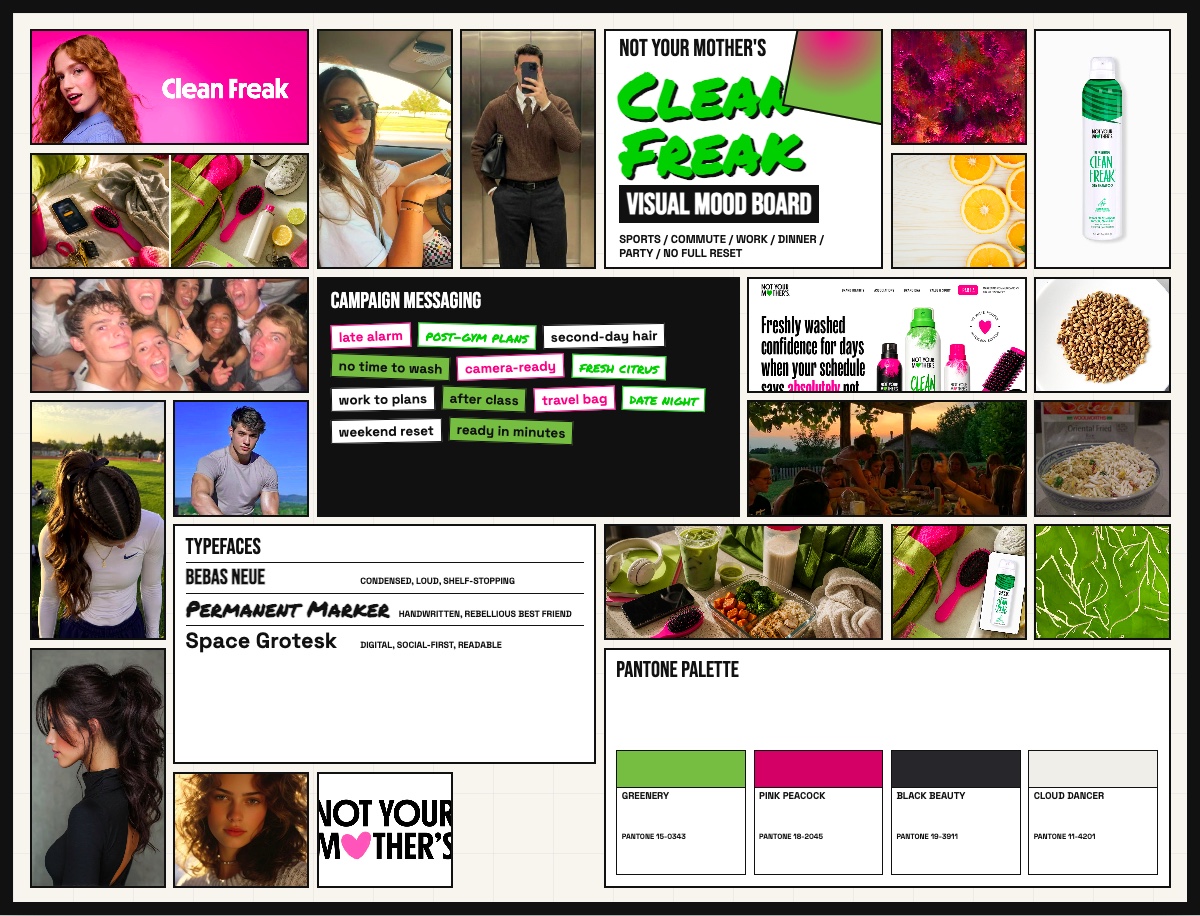
For a brand and campaign marketing course: a full visual mood board for a Not Your Mother's Clean Freak dry-shampoo campaign. The type system (Bebas Neue, Permanent Marker, Space Grotesk), the Pantone palette (Greenery, Pink Peacock, Black Beauty), the campaign messaging and the lifestyle direction, all set before a single layout.

Not Your Mother's Clean Freak visual mood board: type system, Pantone palette, campaign messaging and lifestyle imagery

The Clean Freak visual mood board, the system before the campaign

Coursework 02

From the board,
to the page.

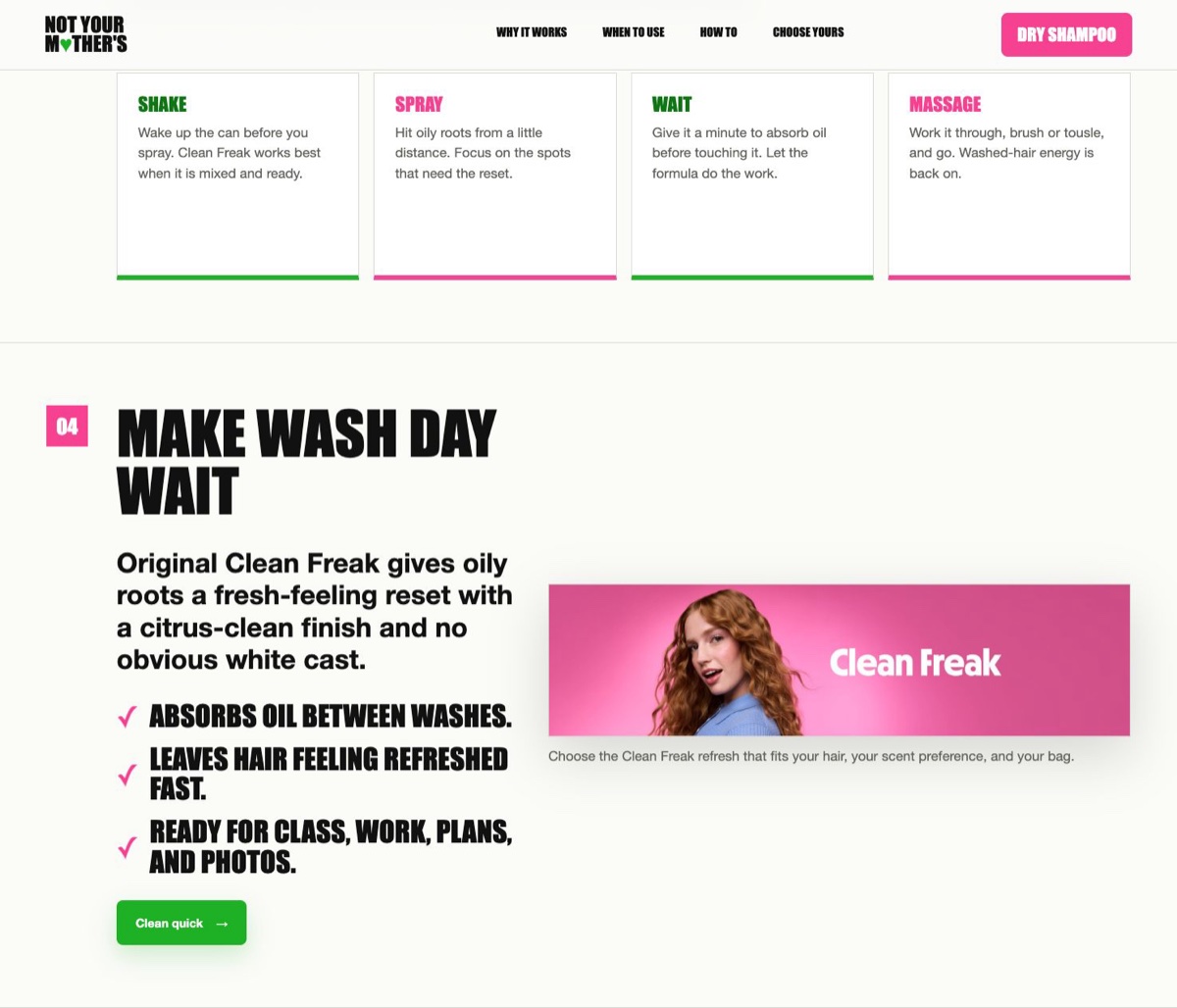
The same course, one step further: the mood board resolved into a working campaign landing page. Bebas Neue headlines, the green-and-pink system, and a shake to massage how-to, the visual language carried from reference into a shippable layout.

Mood board to messaging to a page, the way a real campaign moves.

Clean Freak campaign landing page built from the mood board

Coursework 03

A second board,
a second brand.

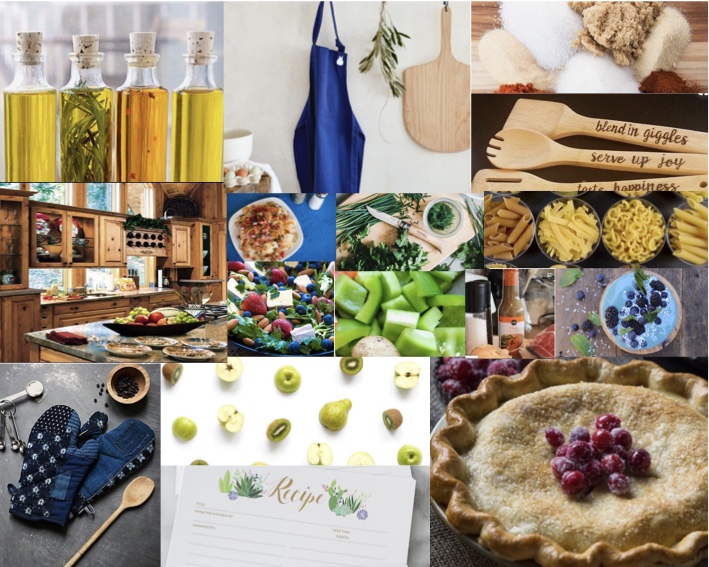
Range, not a one-off: a separate mood board for a Publix Apron brief, food and kitchen lifestyle, warm and homemade. Different brand, different feeling, the same discipline of collecting references until a direction is obvious.

Publix Apron brand mood board: food and kitchen lifestyle imagery

Coursework 04

Models, from the notebook up.

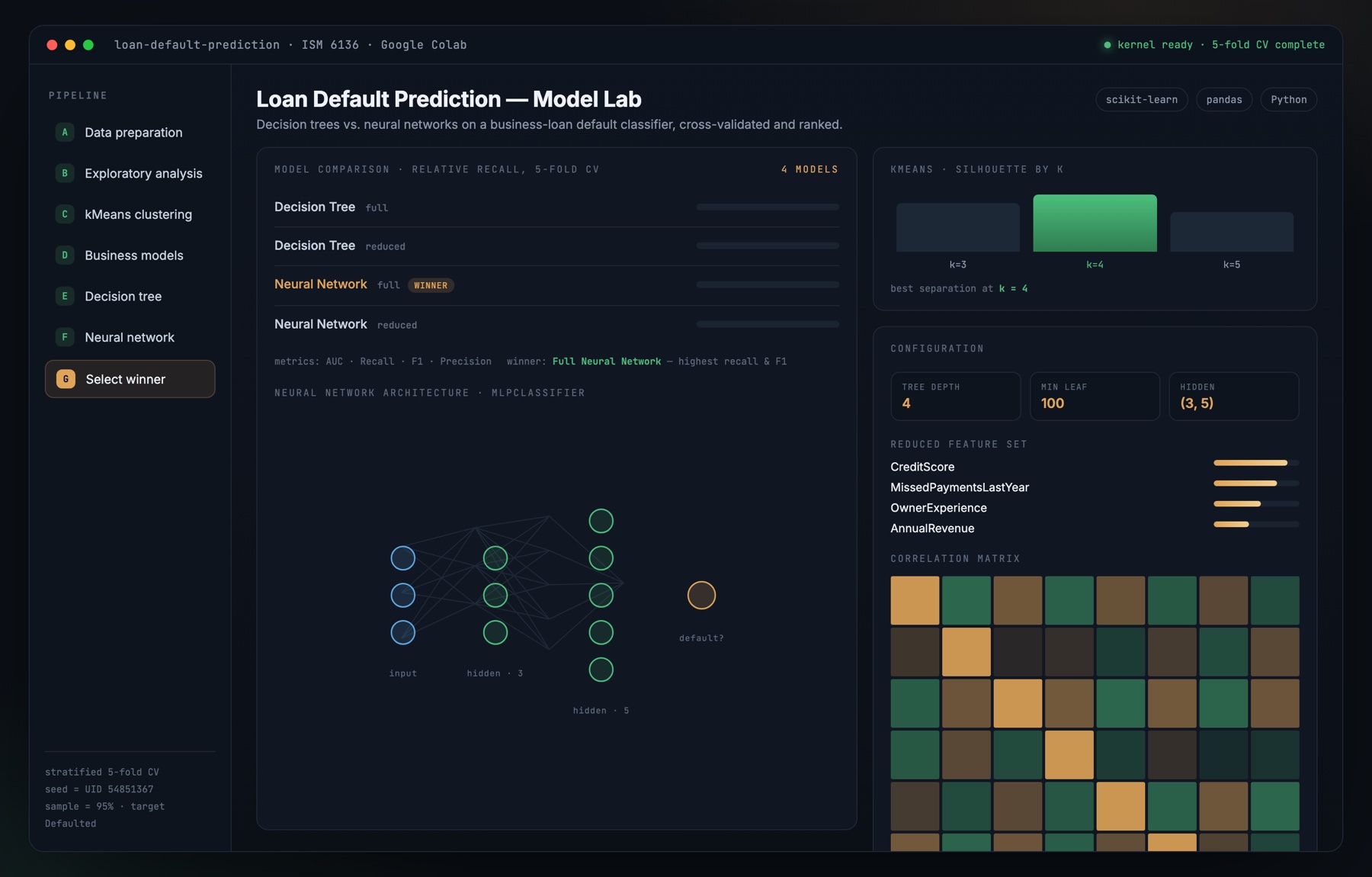
The other half of the degree: machine learning, written and trained by hand. A loan-default classifier for the graduate data mining course on a 1,900-record sample, comparing a decision tree (depth 4, minimum leaf of 100) against a neural network (hidden layers of 3 and 5) under stratified five-fold cross-validation, each with a reduced-feature variant, plus a correlation study and kMeans segmentation at k of 3, 4 and 5.

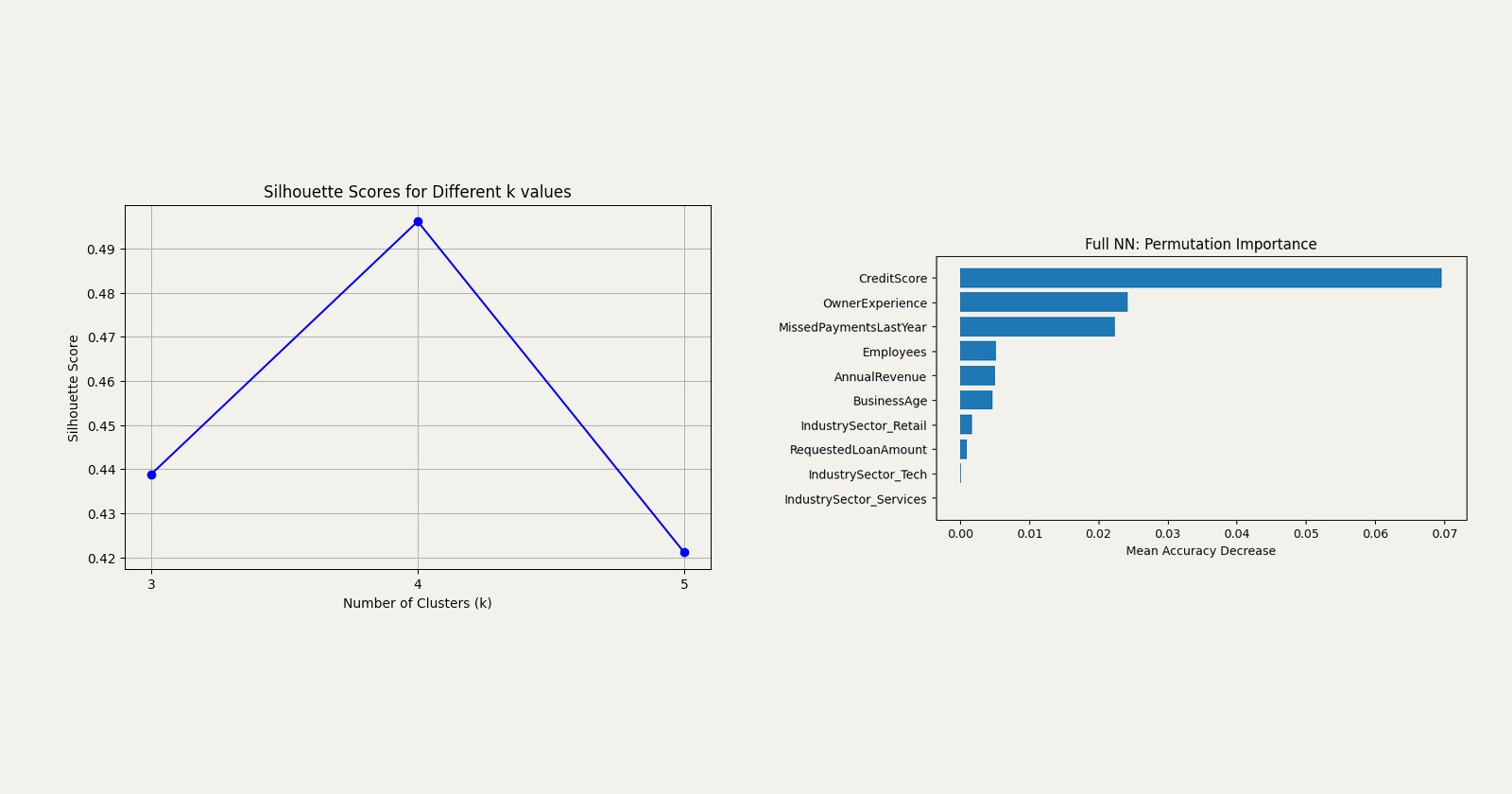
The numbers came out crossed, which is the interesting part. The reduced tree took the best AUC at 0.8201. The full neural network took the best recall at 0.8395 and the lower AUC. I shipped the neural network, because on a loan book a default you failed to catch costs more than an approval you wrongly refused. kMeans landed on four clusters, silhouette 0.4961, splitting the book almost evenly. No black box: the architecture and the trade-off are the point.

Loan-default prediction model lab: decision trees versus a neural network, cross-validated, with feature selection and kMeans

The model lab, decision trees vs. a neural network, cross-validated and compared

Two figures from the notebook: silhouette score against k, peaking at four clusters, and the permutation importance of the full neural network, led by credit score

Straight out of the notebook, silhouette against k, and what the network actually leaned on

Coursework 05 · R

Statistics,
in the open.

Before the neural networks, there was R: writing the model, checking the assumptions, and translating the output into a decision. These assignments show the statistical programming underneath the more recent machine-learning work.

Module 06

What is a Cadillac worth?

A multiple linear regression on 251 Cadillac listings, using odometer, age, condition, cylinders, and an age-squared term. The diagnostic plots ask whether the model can be trusted outside the sample.

LM · DIAGNOSTICS · PREDICTION INTERVAL

Download the R script .R

Module 08

When an email gives itself away.

A logistic regression on 1,000 messages, predicting spam from message and subject-line signals. The model reached about 91% accuracy; the missing urgent_subj coefficient became a lesson in zero variance.

GLM · CLASSIFICATION · CONFUSION MATRIX

Download the R script .R

Coursework 06 · this term

The part
everyone skips.

Applied Data Science, Fall 2026. The brief hands you three sources for a hospital readmission problem: a patient table, a nested clinical JSON, an engagement export. Merging them into 2,507 visits across 800 patients is the easy half. The half that decides whether a model means anything is the order of operations.

So the holdout was cut first, by patient and not by visit, before a single imputer saw the data. The cost cap came from the training rows alone, $47,026.98, then was applied unchanged to the test rows. And the missingness was diagnosed instead of assumed: BMI is missing on 54.84% of visits at the older clinics and 0.00% at the newer ones, which is what a mechanism looks like when you can actually see it. The stakeholder's theory, that satisfaction scores went missing because unhappy patients stayed quiet, did not survive contact with the data, so it stayed a working assumption rather than a finding.

Train visits:    1931      Test visits:    576
Train patients:   632      Test patients:  168
Patient overlap:    0

X_train: (1931, 67)        X_test: (576, 67)
Train missing:      0      Test missing:     0

The whole deliverable, 67 features, nothing missing, nobody counted twice

Coursework 06

Who do you trust to pick your next book?

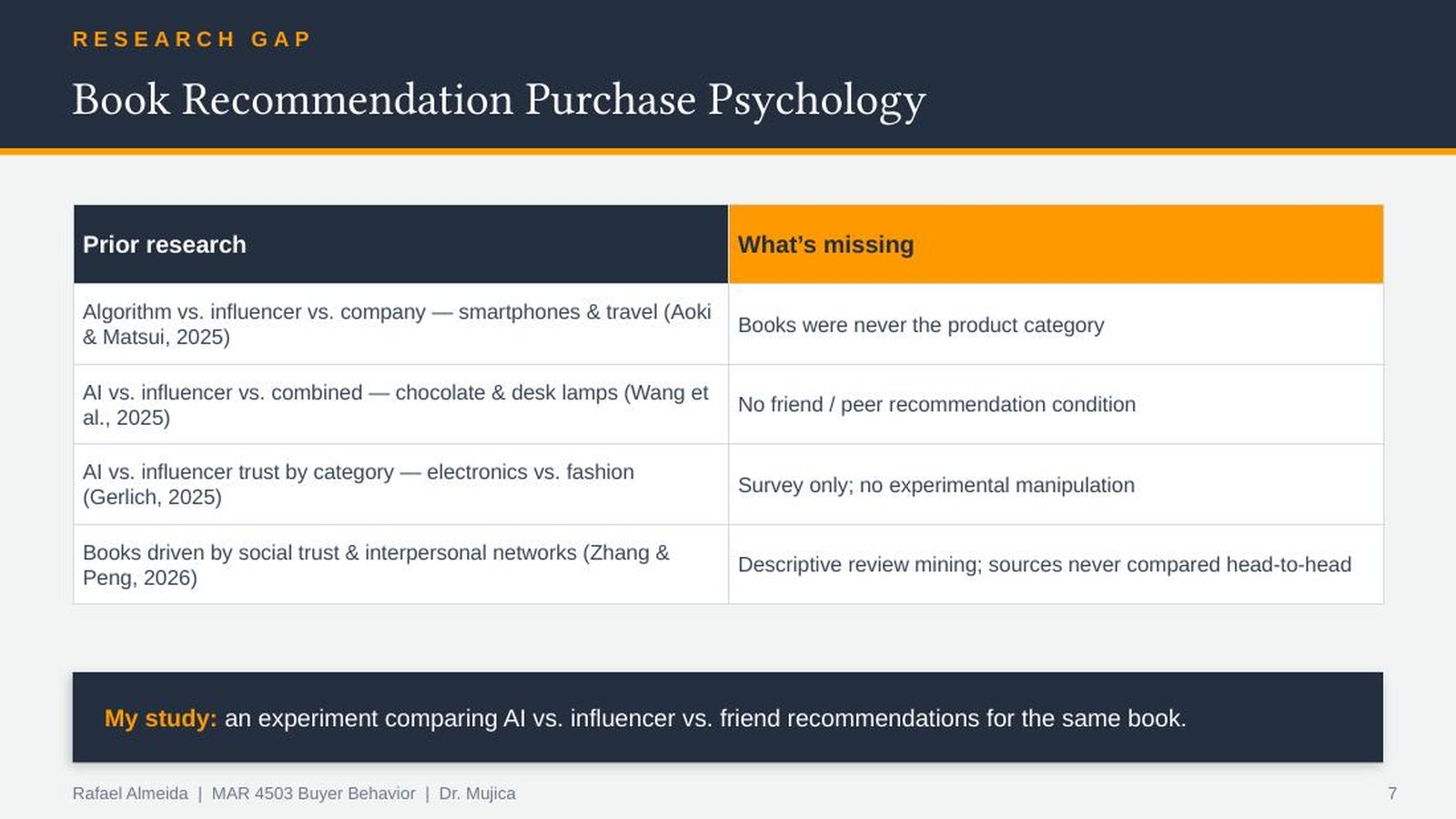
A research design for Buyer Behavior, and an experiment nobody has run. Four 2025 papers set it up: an algorithm can out-sell an influencer, AI wins on products you buy with your head, influence survives where taste is emotional. None of them used books, and none of them included the obvious third source, a friend.

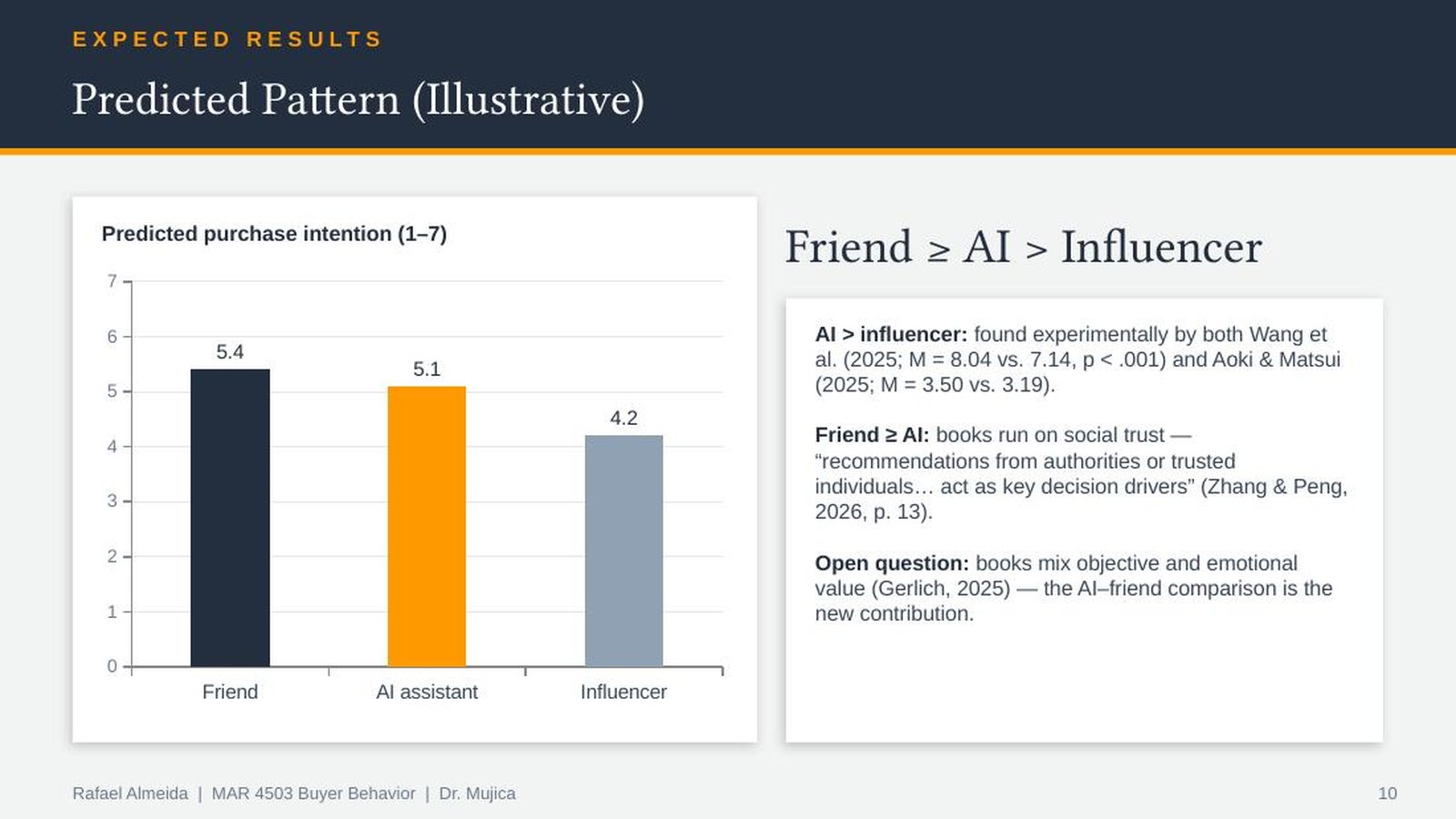
So the design puts AI, influencer and friend against the same novel, between subjects, measured on a validated five-item seven-point purchase-intention scale reported at α = .927. H1 says the AI beats the influencer. H2 says the friend matches or beats the AI, because that recommendation runs on interpersonal trust rather than on being right.

The research gap slide: what four prior studies did, and what each one left out

The gap, four papers and the condition none of them tested

Predicted purchase intention: friend 5.4, AI assistant 5.1, influencer 4.2

The prediction, friend 5.4, AI 5.1, influencer 4.2, and why

Coursework 07

Two decades,
clustered.

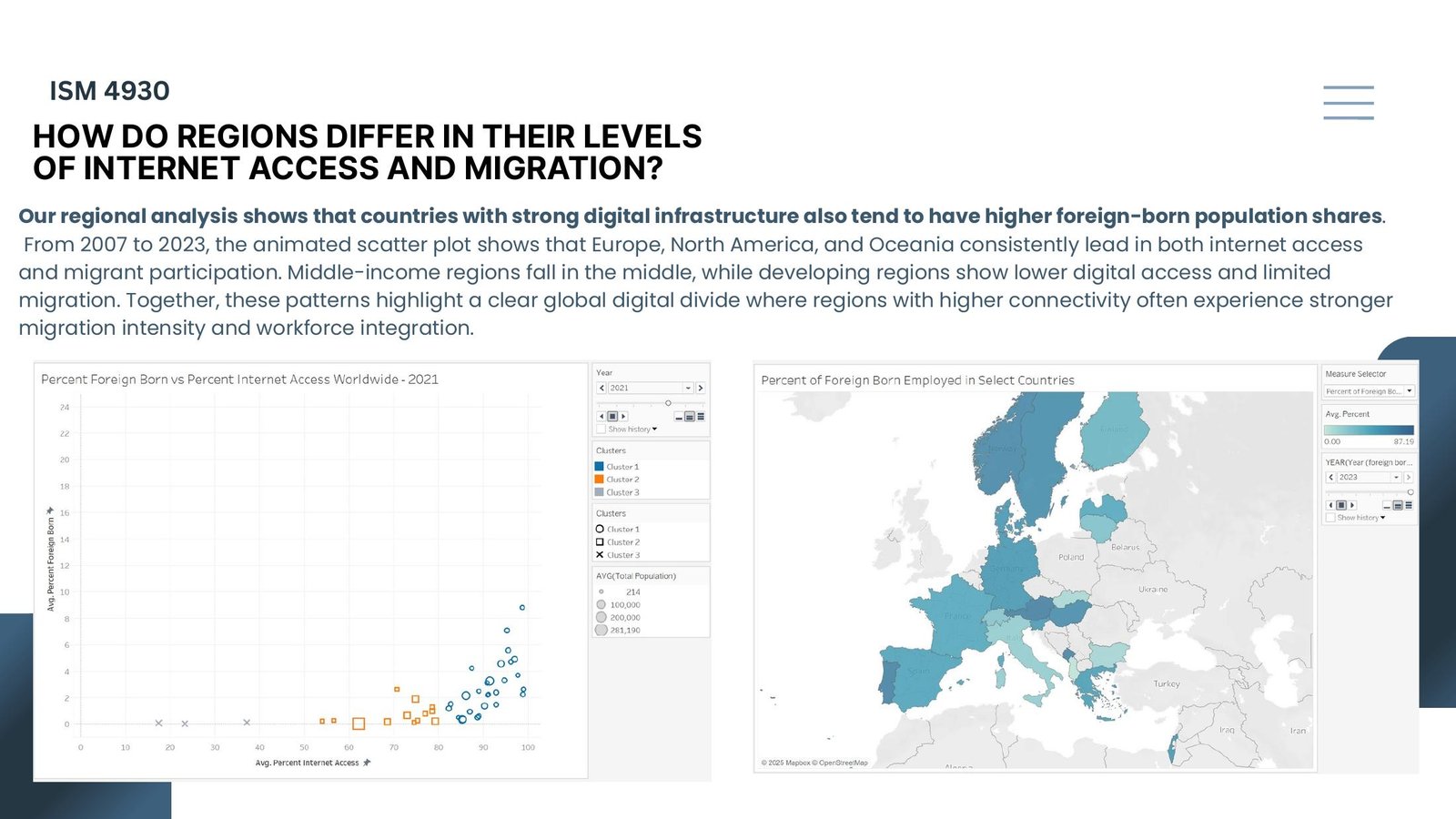
A data visualization final on OECD and ITU data from 2000 to 2023, asking whether internet access and migration move the global workforce together. Built in Tableau: an animated year slider over foreign-born share against internet access, with k-means picking out the clusters as the years run, and a European choropleth of foreign-born employment underneath it.

The pattern holds and the caveat holds with it. Countries with stronger digital infrastructure carry both higher foreign-born populations and stronger labour participation, and the two lines climb together from 2007 on, which is correlation doing its usual job of looking like a cause.

TEAM · RAFAEL ALMEIDA · PRECIOSA NGOY KALUMBA · LUIS ALAY · HUDSON TRUSELL

Tableau output: an animated scatter of foreign-born share against internet access with k-means clusters, beside a European choropleth of foreign-born employment

Coursework 08

The database that confessed.

A PostgreSQL system on Supabase for a five-clinic wellness provider: 14 tables and 497 records covering 50 patients, 15 providers, 200 appointments, 147 invoices and 120 payments, with the business rules written down before the first CREATE TABLE.

Then the part that makes a schema worth building, the queries that ask it something uncomfortable. Half the appointments never completed. Nine in the morning is where the day jams. Massage and physical therapy are not earning the same way, and the gap is a pricing decision, not a demand one. There is a four-minute walkthrough of all three findings.

University of South Florida Bulls

University of South Florida

B.S. Artificial Intelligence and Business Analytics, minor in Marketing. USF Presidential Award, the university's highest academic scholarship, and Florida Academic Scholar, Bright Futures. Tampa, graduating December 2026.